Distinguished Professor, Director, Institute Head
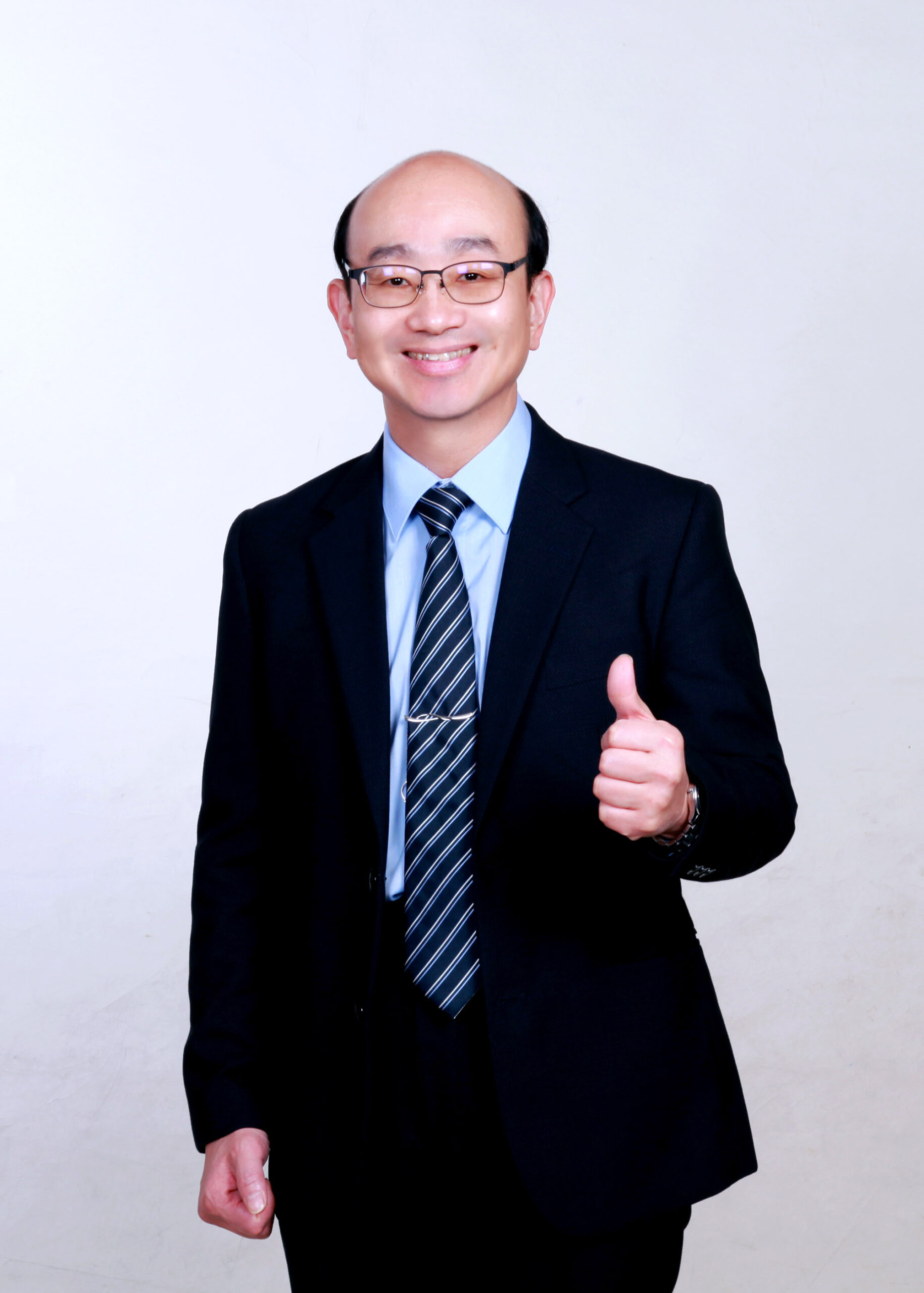
| Professor Wen-Pin Su graduated from the School of Medicine, College of Medicine, National Taiwan University, and obtained his PhD from the Institute of Clinical Medicine, National Cheng Kung University. He is currently a distinguished professor and the director of the Institute of Clinical Medicine at National Cheng Kung University (NCKU) and the director of the Clinical Medicine Research Center at National Cheng Kung University Hospital (NCKUH). Professor Su is also a clinical oncologist and a professor at the Departments of Oncology and Urology, School of Medicine at NCKU. He is also a member of the Center of Applied Nanomedicine, NCKU.
In addition to his daily work on outpatient diagnosis, treatment, and inpatient medical services for cancer patients, he is also actively involved in the “Taiwan Clinical Trial Consortium- Genitourinary Cancer” and numerous phase III global clinical trials and has been invited to publish co-author papers in the top international journals, such as “Lancet” and “Lancet Oncology.” He has received twice the “Top International Journal Awards” from National Cheng Kung University. Professor Su also participates in early-phase clinical trials in cancer treatment, including first-in-human phase I international clinical trials. Additionally, he serves as a review committee member for cancer diagnostic tests and laboratory-developed tests (LDTs) and as a member of the National Health Service’s Cancer Prevention and Treatment Review Committee. Regarding his research, Professor Su focuses on utilizing nano-platforms and extracellular vesicles (exosomes) to modulate the tumor microenvironment, thereby enhancing the efficacy of cancer immunotherapy. He also concentrates on DNA repair mechanisms to address drug resistance issues in clinical cancer treatment. Since 2021, Professor Su has published nine corresponding author papers in journals with Impact Factors exceeding 10 (e.g., Nano Today, ACS Nano, Nucleic Acids Research, Nature Communications, Journal of Nanobiotechnology), with five of these papers achieving Impact Factors over 15, demonstrating his prolific research output. In 2021, he was nominated for the “Future Technology Award” shortlisted. In 2023, he received “Dr. Chien-Tien Hsu’s Outstanding Cancer Research Award” from the Taiwan Oncology Society. In 2024, he was awarded the “Excellence in Academic Research Grant – Publication in the Top 5% of Academic Fields” by NCKU. He is also honored with the “National Innovation Award of Taiwan Government- Academic and Research Innovation” in 2024. In 2025, he also won “Year paper in Medical Campus, NCKU,” “Future Technology Award” and “National Innovation Award of Taiwan Government- Academic and Research Innovation.” Professor Su, as a seasoned oncologist with extensive experience in clinical trials for novel cancer therapeutics. He bridges nanotechnology platforms with microscopic research to pioneer novel cancer treatment approaches. From the 2018 Nobel Prize in Physiology or Medicine awarded to researchers studying CTLA-4 and PD-1/PD-L1, to the 2019 prize recognizing the discovery of hypoxia mechanisms, and the 2025 award for metal-organic framework nanomaterials, these accolades confirm that nanotechnology applications in biomedicine align with global trends. We aim to contribute significantly to the development, research, and treatment of novel cancer therapies. |
2025 22nd National Innovation Award of Taiwan Government- Academic and Research Innovation.
2025 Future Tech Award
2025 Year paper in Medical Campus, NCKU
2025 ~ 2021 The Best Paper Award of Cheng-Hsing Medical Foundation, Taiwan.
2025 2025 Smart Healthcare Cross-Disciplinary Project – First Place in the Group Category
2024 Distinguished Professor, National Cheng Kung University
2024 21st National Innovation Award of Taiwan Government- Academic and Research Innovation.
2024 Merit Award, NCKU Sustainable Project. (Nucleic Acids Research, 2024, 52(10):5676-5697. IF=16.6, top 1.9%)
2024 National Cheng Kung University Alumni Foundation- Annual Sustainable Interdisciplinary. Research Award Excellence Award.
2023 Dr. Chien-Tien Hsu’s Outstanding Cancer Research Award of Taiwan Oncology Society.
2022 Mentor of the Grand Review for Year Publication from Ph.D. Student, NCKU.
2021 Merit Award, NCKU Sustainable Project. (ACS Nano, 2021, 15 (5), 9084–9100. IF=15.8, top 6.2 %)
2021 Future Tech Award (Shortlisted).
2021 Poster Award, basic science and translation medicine, Taiwan Joint Cancer Congress.
2021 Mentor of Champion Award for the Research Day in oral Presentation, NCKU.
2020 Year Award for Excellent Paper Publication (Lancet Oncology) for the international clinical trial in NCKU.
2018 Year Award for Excellent Paper Publication (Lancet) for the international clinical trial in NCKU.
2015 Young Investigator Research Award in Clinical Medicine, College of Medicine, NCKU.
2014 & 2015 Poster Award, basic science and translation medicine, Taiwan Joint Cancer Congress.
2024.8~ present, Distinguished Professor, Institute of Clinical Medicine, NCKU.
2023.8~ present, Director, Institute of Clinical Medicine, NCKU.
2023.8~ present, Director, Clinical Medicine Research Center, NCKUH.
2023.8~ present, Director, the International Medical Program in Interneuroscience, NCKU.
2021.8~ present, Professor, Institute of Clinical Medicine, NCKU.
2021.8~ present, Joint Appointment Professor, Departments of Oncology, Internal Medicine and Urology, School of Medicine, NCKU.
2020.10~ Present, Attending Physician, Department of Oncology, NCKUH.
2020.8~2023.7, Deputy Director, Cancer Center, NCKUH.
2017.8~2021.7, Associate Professor, Institute of Clinical Medicine, NCKU.
2017.8~2021.7, Joint Appointment Associate Professor, Departments of Oncology, Internal Medicine and Urology, School of Medicine, NCKU.
2015.8~2017.7, Assistant Professor, Institute of Clinical Medicine, NCKU.
2013.2~2017.7, Clinical Assistant Professor, School of Medicine, NCKU.
2005.7~2020.9, Attending Physician, Department of Internal Medicine, NCKUH.
1999.7~2005.6, Residency, Departments of Internal Medicine and Oncology, National Taiwan University Hospital.
-
- Cheng TY, Chang LC (Dr. Su’s postdoctal researcher), Yang LX, Wu SS, Chin YC, Chen YJ, Chia ZC, Su WP*, Huang CC*. Bioactive Light-Responsive Au Nanohybrids for Reactive Oxygen Species-Driven Macrophage Reprogramming. ACS Applied Materials & Interfaces. 2025 Oct 1;17(39):54453-54465. (Corresponding author) (IF:8.2)
- Chin YC, Chen YT, Chiu YC, Wu SR, Chang LC, Yang LX, Liu HS, Wu GC, Yu CC, Dong DC, Chiang IT, Liu YC, Su WP, Hsu FT*, Huang CC*. Galactosylated iron oxide nanoplatforms for targeted imaging and ferroptosis-enhanced glioblastoma therapy via immune modulation. Materials Horizons. 2025 Aug 14; 12(22):9697-9714. (Co-author) (IF:10.7)
- Gupta T (Dr. Su’s Ph.D.student), Wu SR, Chang LC, Lin FC, Shan YS, Yeh CS, Su WP*(only corresponding author). Radiocleavable rare-earth nanoactivators targeting over-expressed folate receptors induce mitochondrial dysfunction and remodel immune suppressive microenvironment in pancreatic cancer. Journal of Nanobiotechnology. 2025 Aug 12;23(1):562. (Corresponding author) (IF:12.6)
- Chen YC, Chang LC, Liu TL, Chang MC, Liu YF, Change PY, Manoharan D, Wang WJ, Chen JS, Wang HC, Chiu WT*, Li WP*, Sheu HS*, Su WP*, Yeh CS*. Redox disruption using electroactive liposome coated gold nanoparticles for cancer therapy. Nature Communications. 2025 Apr 5;16(1):3253. (Corresponding author) (IF: 15.7) —2025年未來科技獎 / 國家新創獎-學研新創
- Yeh CF, Chen CC, Lai CC, Liu JW, Tang HJ*, Su WP*. Synergistic effect of repurposed mitomycin C in combination with antibiotics against Aeromonas infection: In vitro and in vivo studies. Journal of Microbiology Immunology and Infection. 2025; 58(2):189-197. (Corresponding author) (IF: 3.7)
- Giannatempo P*, Machiels JP, Sassa N, Arranz JA, Fujii Y, Su WP, et al. Impact of Histology on Clinical Outcomes of Pembrolizumab Monotherapy in Patients With Advanced or Metastatic Urothelial Carcinoma in the Phase 3 KEYNOTE-045 and KEYNOTE-361 Trials. Clinical Genitourinary Cancer. 2025 Apr;23(2):102273. (Co-author) (IF:2.7)
- Hsu FT*, Chen YT, Chin YC, Chang LC, Chiang SC, Yang LX, Liu HS, Yueh PF, Tu HL, He RY, Jeng LB, Shyu WC, Hu SH, Chiang IT, Liu YC, Chiu YC, Wu GC, Yu CC, Su WP*, Huang CC*. Harnessing the Power of Sugar-Based Nanoparticles: A Drug-Free Approach to Enhance Immune Checkpoint Inhibition Against Glioblastoma and Pancreatic Cancer. ACS Nano. 2024; 18 (42): 28764-28781. (Corresponding author) (IF: 15.8)
- Wang LC, Chang LC, Huang HL, Chang PY, Pao CW, Liu YF, Huang KS, Chien YH*, Sheu HS*, Su WP*, Yeh CH*, Yeh CS*. Synergistic ROS Generation via Core-Shell Nanostructures with increased lattice microstrain Combined with Single-Atom Catalysis for Enhanced Tumor Suppression. ACS Applied Materials & Interfaces. 2024; 16(34): 45356–45370. (Corresponding author) (IF: 8.5)
- Wu CK (Su WP’s Ph.D. student), Shiu JL, Wu CL, Hung CF, Ho YC, Chen YT, Tung SY, Yeh CF, Shen CH, Liaw H*, Su WP*. APLF facilitates interstrand DNA crosslink repair and replication fork protection to confer cisplatin resistance. Nucleic Acids Research. 2024; 52(10):5676-5697. (Corresponding author) (IF: 16.7) —成功大學醫學院年度論文
- Chang LC (Su WP’s Ph.D. student), Chin YC, Wu PC, Wei YF, Wu HC, Cheng TY, Liu YF, Huang CC*, Su WP*. Polymeric nano-formulation of spectrum selective RTK inhibitor strengthens anti-cancer effects via immune remodeling by endoplasmic reticulum stress-modulating mitochondrial metabolism. Nano Today. 2024 Feb; (54): 102070. (Corresponding author) (IF: 13.2) —2024年國家新創獎-學研新創
- Wang LC, Chiou PY, Hsu YP, Lee CL, Hung CH, Wu YH, Wang WJ, Hsieh GL, Chen YC, Chang LC, Su WP, et al. Prussian blue analog with separated active sites to catalyze water driven enhanced catalytic treatments. Nature Communications. 2023 Aug 5;14(1):4709. (IF: 16.6)
- Wang LC, Chang LC, Chen WQ, Chien YH, Chang PY, Pao CW, Liu YF, Hsu HS*, Yeh CH*, Su WP*, Yeh CS*. Atomically dispersed golds on degradable zero-valent copper nanocubes augment oxygen driven Fenton-like reaction for effective orthotopic tumor therapy. Nature Communications. 2022; 13: 7772. (Corresponding author) (IF: 17.694)
- Wu CK, Wei MT, Wu HC, Wu CL, Wu CJ, Liaw H, Su WP*. BMP2 promotes lung adenocarcinoma metastasis through BMP receptor 2-mediated SMAD1/5 activation. Scientific Reports. 2022; 12: 16310 (Corresponding author) (IF: 4.997)
- Su WP*, Chang LC, Song WH, Yang LX, Wang LC, Chia ZC, Chin YC, Shan YS, Huang CC*, Yeh CS*. Polyaniline-Based Glyco-Condensation on Au Nanoparticles Enhances Immunotherapy in Lung Cancer. ACS Applied Materials & Interfaces. 2022; 14(21): 24144-24159. (First & Corresponding author) (IF: 10.383)
- Wang LC, Chang LC, Su GL, Chang PY, Hsu HF, Lee CL, Li JR, Liao MC, Sheu HS*, Tu TY*, Su CH*, Su WP*, Yeh CS*. Chemical structure and shape enhance MR imaging guided X-ray therapy following marginative delivery. ACS Applied Materials & Interfaces. 2022; 14(11): 13056-13069 (Corresponding author) (IF: 10.383)
- Gupta T, Debele TA, Wei YF, Gupta A, Murtaza M, Su WP*. Synergistic action of Immunotherapy and Nanotherapy against cancer patients infected with SARS-CoV-2 and the use of Artificial Intelligence. Cancers. 2022; 14(1): 213. (Corresponding author) (IF: 6.575)
- S Bazarbashi, Su WP, SW Wong, RA Singarachari, S Rawal, MI Volkova, Da Bastos. A Narrative Review of Implementing Precision Oncology in Metastatic Castration-Resistant Prostate Cancer in Emerging Countries. Oncology and Therapy. 2021 Dec; 9(2):311-327. (IF: 3.2)
- Hsu LN#, Tsai YS#, Tsai HT, Su WP*, Tong YC*. Study on the pathophysiological mechanism responsible for lower urinary tract symptoms associated with prostate cancer using an animal model. LUTS. 2021 Jul; 13(3):390-399. (Corresponding author) (IF: 1.592)
- Manoharan D, Chang LC, Shan YS, Wang LC, Lin FC, Wu LC, Sheu HS, Su WP*, Yeh CS. Synchronization of Nanoparticle Sensitization and Radiosensitizing Chemotherapy through Cell Cycle Arrest Achieving Ultralow X-Ray Dose Delivery to Pancreatic Tumors. ACS Nano. 2021; 15 (5), 9084–9100. (Corresponding author) (IF: 15.881)
- Debele TA, Wu PC, Wei YF, Chuang JY, Chang KY, Tsai JH, Su WP*. Transferrin Modified GSH Sensitive Hyaluronic Acid Derivative Micelle to Deliver HSP90 Inhibitors to Enhance the Therapeutic Efficacy of Brain Cancers. Cancers. 2021; 13 (10): 2375. (Corresponding author) (IF: 6.639)
- Pham KY, Wang LC, Hsieh CC, Hsu YP, Chang LC, Su WP, Chien YH, Yeh CS. 1550 nm excitation-responsive upconversion nanoparticles to establish dual-photodynamic therapy against pancreatic tumor. Journal of Materials Chemistry B., 2021 Jan; 9, 694-709. (SCI, 9/38, Materials Science,Biomaterials). (IF: 6.331)